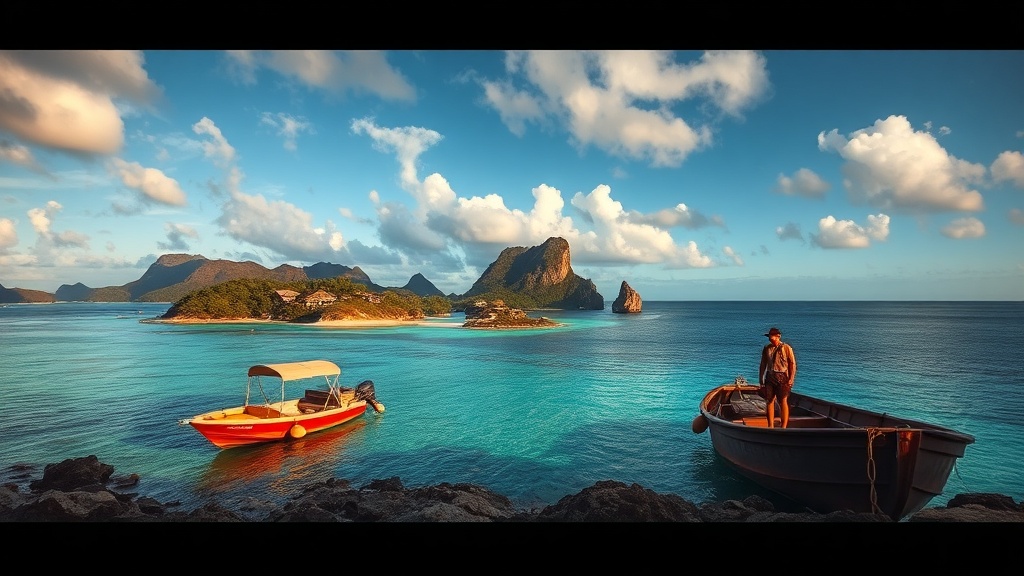
Remote Island Breaks for Solo Travelers

The Hidden Shores of Indonesia
Sumba's Unspoiled Coastlines
The Marquesas Islands Escape
Most solo travelers assume that "remote" means "dangerous" or "unprepared." They think you need a full crew or a massive budget to access the world's most isolated islands. That's a mistake. This post covers five specific, remote island destinations that are perfectly safe and accessible for solo adventurers, provided you know how to plan for the logistics. We'll look at the actual costs, the gear you'll need, and the reality of getting there.
Where are the best remote islands for solo travelers?
The best remote islands for solo travelers are places like the Azores, the Andaman Islands, and the Socotra Archipelago, where infrastructure exists but crowds don't. You don't need a group to enjoy isolation—you just need a solid itinerary and a bit of grit.
When you're traveling alone, your biggest concern isn't just the scenery; it's the ability to move around without a guide. I've found that the best spots are those that offer a balance of ruggedness and reliable local transport. You want to be far away from the tourist traps, but not so far that you can't find a decent meal or a place to sleep if the weather turns sour.
1. The Azores, Portugal
The Azores are a collection of nine volcanic islands in the middle of the Atlantic Ocean. They're incredibly safe, which is a huge win for anyone traveling solo. You can rent a car and drive through misty, green landscapes without ever feeling like you're in a high-risk area.
I highly recommend staying on São Miguel if you want more amenities, but if you're looking for true isolation, head to Flores. It's much smaller. The hiking is world-class, and the weather changes every ten minutes (so bring a solid rain shell). You'll find that the local culture is welcoming, and even if you're eating alone at a small cafe, nobody gives you a second glance.
For gear, don't skimp on your footwear. You'll be walking on volcanic rock and muddy trails. A pair of Salomon X Ultra hiking shoes will serve you much better than a pair of flimsy sneakers. The terrain is unforgiving.
2. Koh Lipe, Thailand
While Thailand is a massive hub for backpackers, Koh Lipe feels like a different world compared to Phuket or Koh Samui. It's a tiny island with a single walking street. It's small enough that you won't get lost, but remote enough to feel like an escape.
The beauty of Koh Lipe is the ease of solo travel. You can hop on a longtail boat to nearby islands for a few dollars, or just sit on the beach with a book. It's low-stress. The catch? The internet can be spotty during the monsoon season, so don't rely on it for work. If you're a digital nomad, you might find the connectivity frustrating.
Pro Tip: Use a waterproof dry bag from a brand like Sea to Summit to keep your electronics safe during boat transfers. The salt spray is no joke.
3. Socotra, Yemen
Socotra is as remote as it gets. It's home to the famous Dragon's Blood trees and looks like something from another planet. This isn't a place for the casual vacationer—it's for the serious adventurer. You can't just "wing it" here.
You'll likely need to book through a local operator to handle the logistics of transport and camping. While the political situation in the broader region can be volatile, Socotra remains a distinct, relatively stable bubble of incredible natural beauty. It's a bucket-list item for a reason. However, you'll be living a very basic lifestyle. Expect sand, wind, and very few luxuries.
| Destination | Vibe | Solo Difficulty | Main Attraction |
|---|---|---|---|
| The Azores | European/Rugged | Easy | Volcanic Lakes |
| Koh Lipe | Tropical/Relaxed | Very Easy | Crystal Waters |
| Socotra | Alien/Wild | Hard | Dragon's Blood Trees |
| Easter Island | Historical/Isolated | Moderate | Moai Statues |
How much does it cost to travel to remote islands?
The cost of traveling to remote islands varies wildly depending on whether you are visiting a developed archipelago like the Azores or a developing region like Socotra. You can spend as little as $40 a day or as much as $300 a day depending on your choices.
In the Azores, you'll be paying European prices for food and accommodation. It's not "cheap," but it's predictable. In Southeast Asia, your money goes much further. If you're staying in a hostel or a small guesthouse, you'll be shocked at how little you spend on daily meals.
The biggest hidden cost is often the flight. Because these places are remote, airlines don't fly there as frequently, which keeps prices high. I always suggest booking your flights via Google Flights at least three months in advance to avoid the "last-minute" price hikes. It's a simple way to save a few hundred dollars.
4. Easter Island (Rapa Nui), Chile
Easter Island is the definition of isolated. It's a long, expensive flight from the Chilean mainland. But the sight of the Moai statues against the Pacific horizon is something you'll never forget. It's a heavy, quiet place—almost spiritual.
Since it's a protected site, there are strict rules about where you can go and what you can touch. You'll need to be respectful of the local Rapa Nui culture. Most people here are incredibly proud of their heritage, so do your homework before you arrive. It's not just a photo op; it's a living history.
For documentation, check the UNESCO World Heritage site for specific guidelines on visiting the archaeological areas. This helps ensure you don't accidentally break any rules that could result in a fine.
5. The Faroe Islands, Denmark
If you prefer dramatic cliffs and moody weather over tropical beaches, the Faroe Islands are for you. It's a place of steep mountains and deep fjords. It feels incredibly lonely in the best way possible. You can stand on a cliff edge and feel like the only person on Earth.
The infrastructure is excellent, but the weather is the real boss here. It's unpredictable. You'll see sun, rain, and fog all in the same hour. Don't try to fight it—just prepare for it. A high-quality waterproof jacket is non-negotiable. I use my Patagonia Torrentshell almost every day when I'm out there.
One thing to note: driving in the Faroe Islands can be intense. The roads are narrow, and the sheep often have the right of way (literally). If you aren't comfortable with tight turns and steep grades, you might want to stick to the main towns.
- Research the Season: Don't visit remote islands during their peak storm seasons.
- Check Connectivity: Know if you'll have Wi-Fi or if you're going completely off-grid.
- Pack Smart: Bring gear that handles extreme conditions, not just "fair weather" clothes.
- Local Laws: Understand the rules for hiking and photography in protected areas.
The reality of solo travel to these places is that you have to be your own advocate. There is no one to split the bill with, and there is no one to help you if you lose your way. But that's also the point. The independence you gain from successfully navigating a remote island is worth every bit of the initial stress. It's about proving to yourself that you can handle the unexpected.